Unlocking Innovation in SAP Procurement
Lean Services enables a modern, scalable SAP S/4HANA procurement experience with improved
efficiency and flexibility.It simplifies service procurement processes while enabling modern Fiori
experiences, better analytics, and future-ready innovation.
Lean Services enables a modern, scalable SAP S/4HANA procurement experience with improved
efficiency and flexibility.It simplifies service procurement processes while enabling modern Fiori experiences, better analytics, and future-ready innovation.
Unlocking Innovation
Why Lean Services is the Future of SAP Procurement
Many organisations are surprised to find that after a costly migration from ECC to SAP S/4HANA, the user experience (UX) feels stagnant on the procurement processes. The culprit? Classic Services (MM-SRV).
By clinging to legacy service structures, companies force their modern S/4HANA system to
behave like an old ECC environment. This results in the use of Advanced Fiori Apps which
are often just a GUI-over-HTML veneer rather than true, native Fiori productivity. To fully
leverage your SAP investment, adopting Lean Services is no longer optional; it is a strategic
necessity for efficiency, agility, and AI readiness.
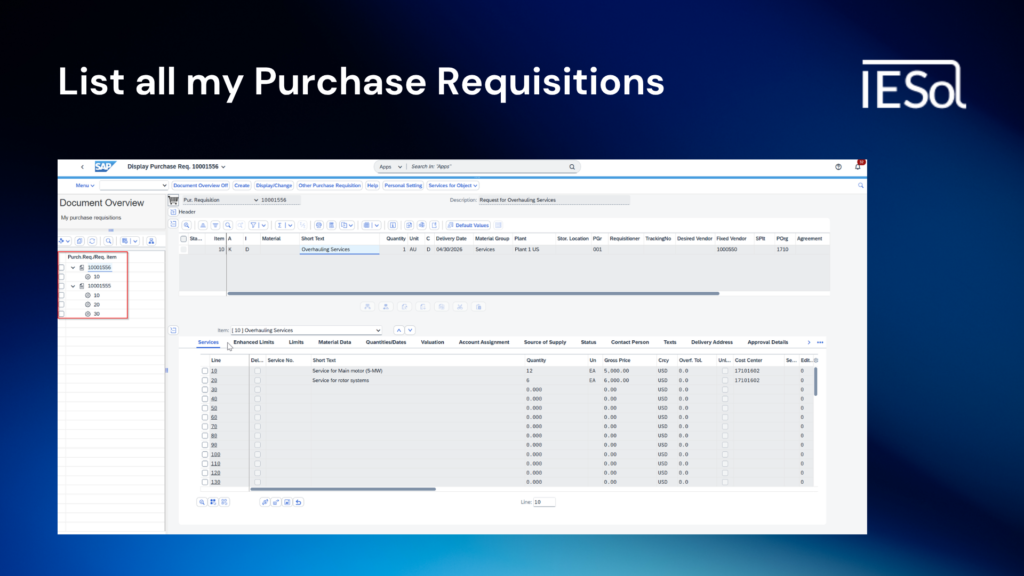
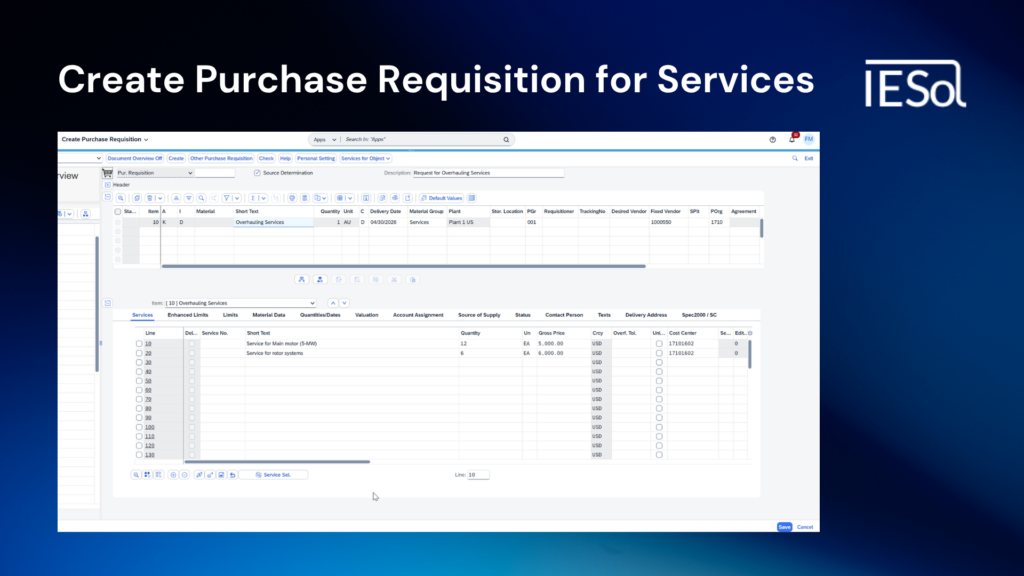
Classic service procurement experience
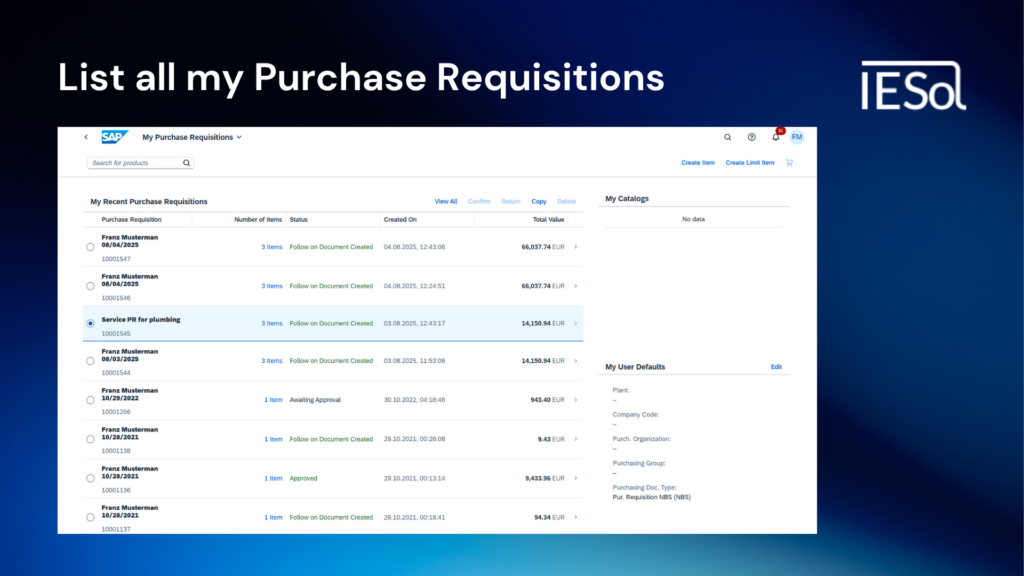
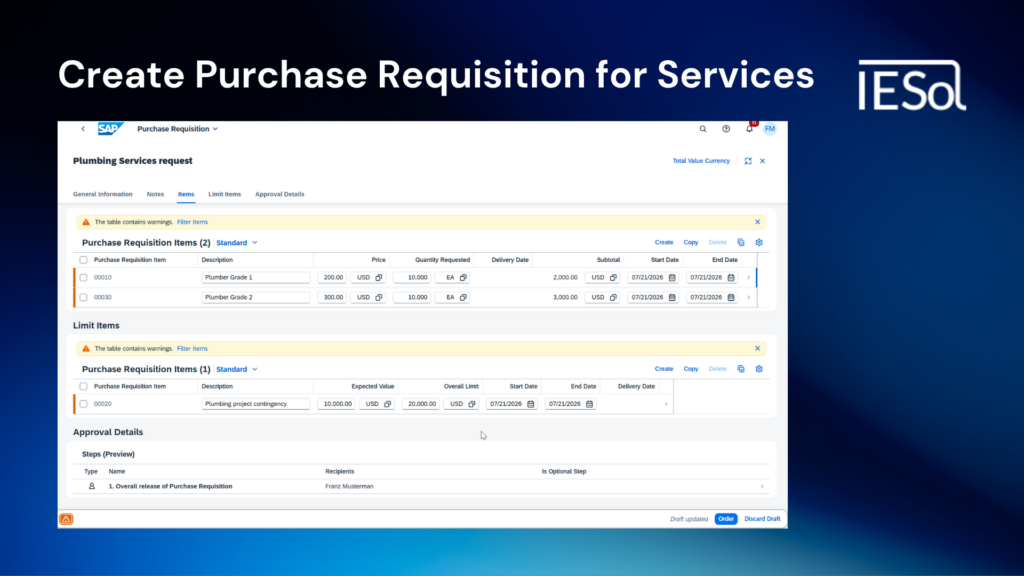
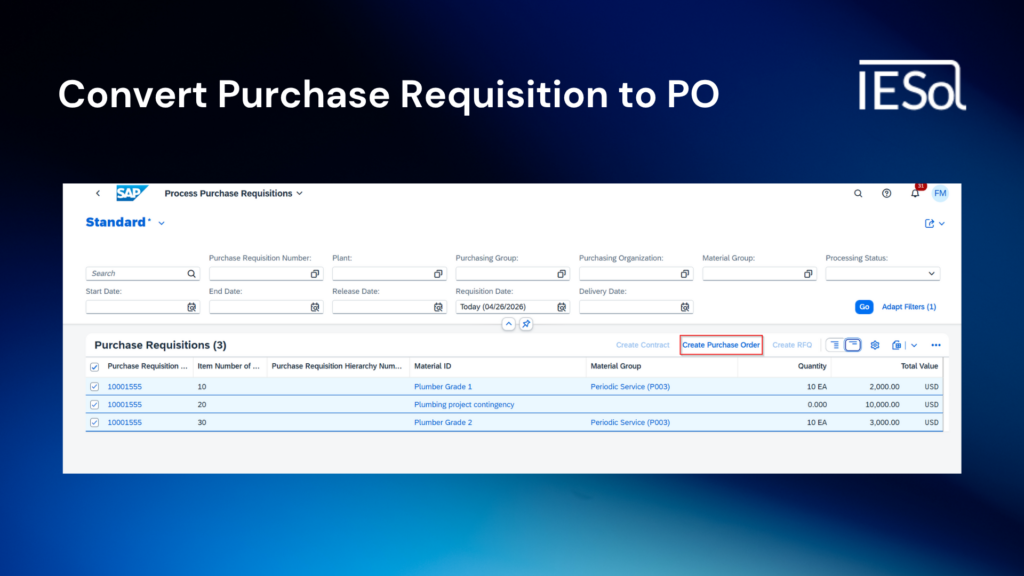
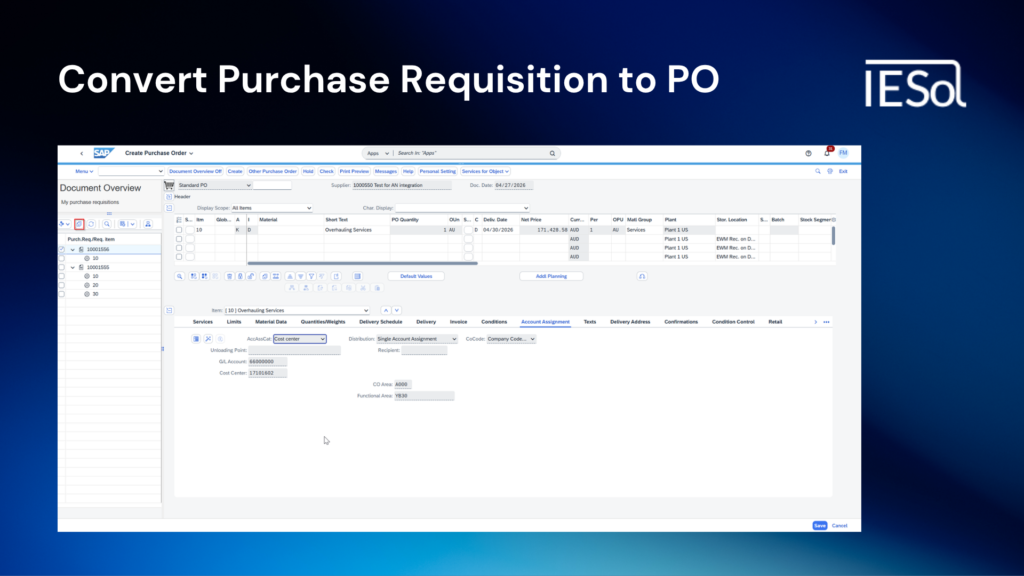
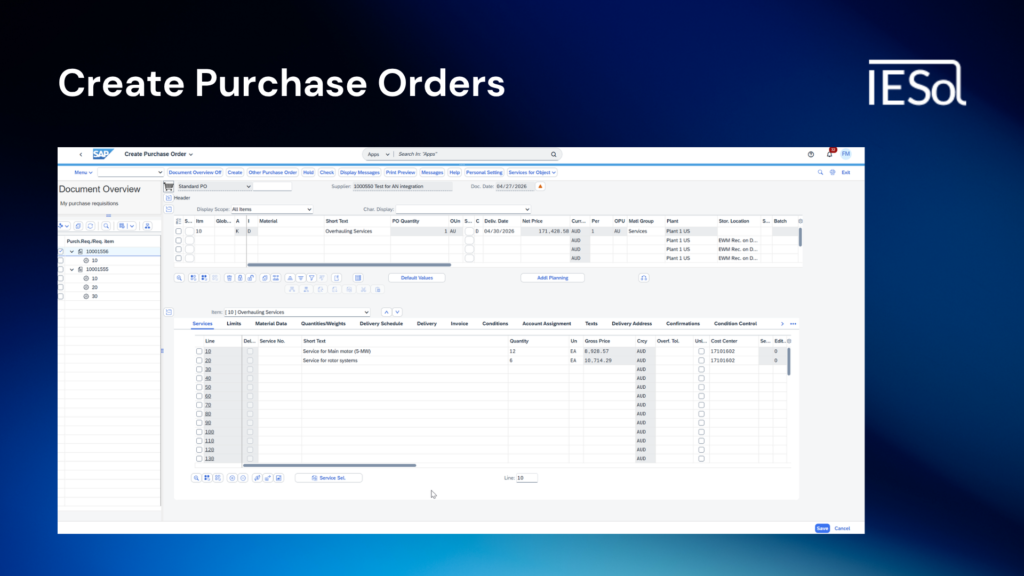
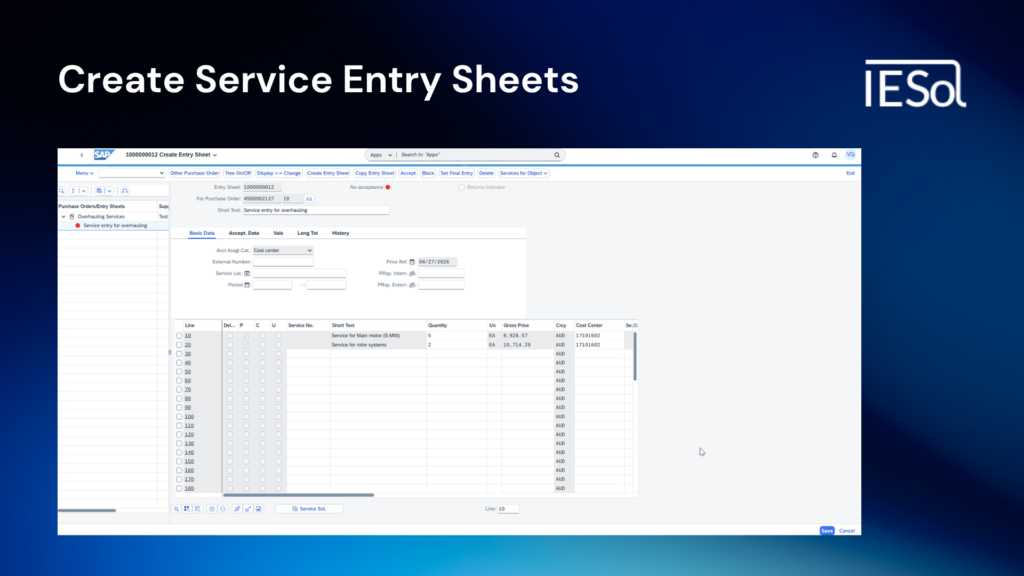
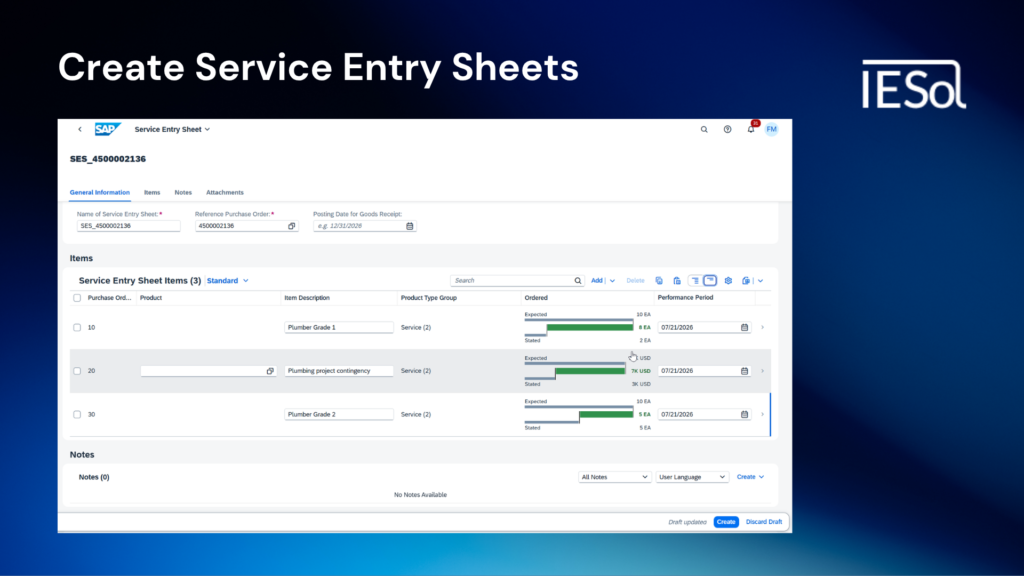
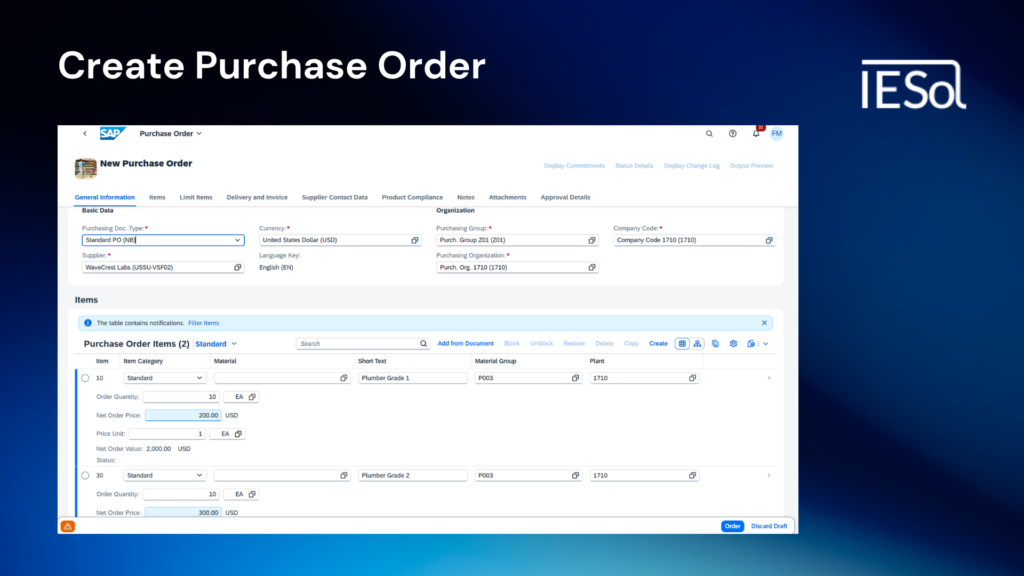
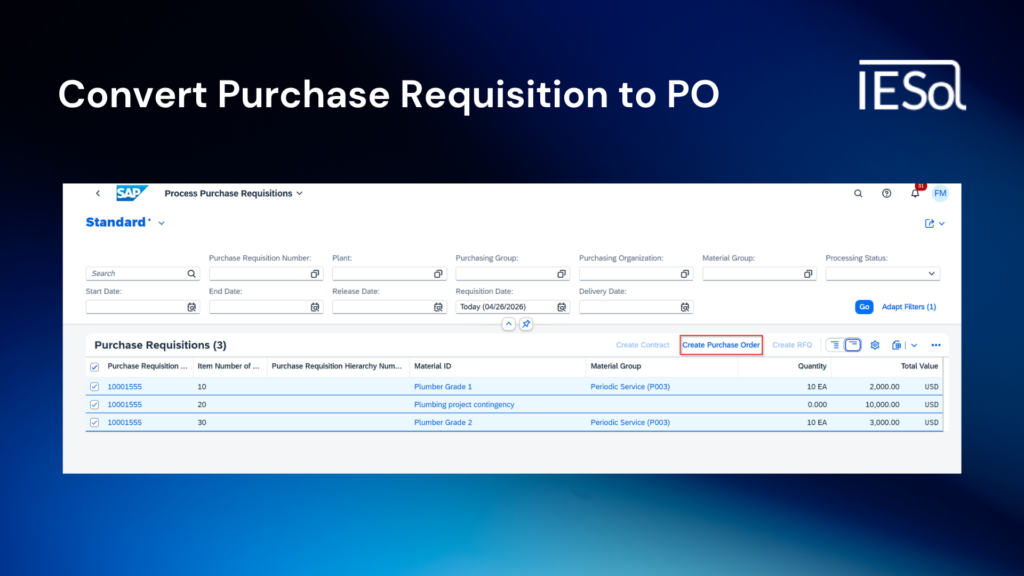
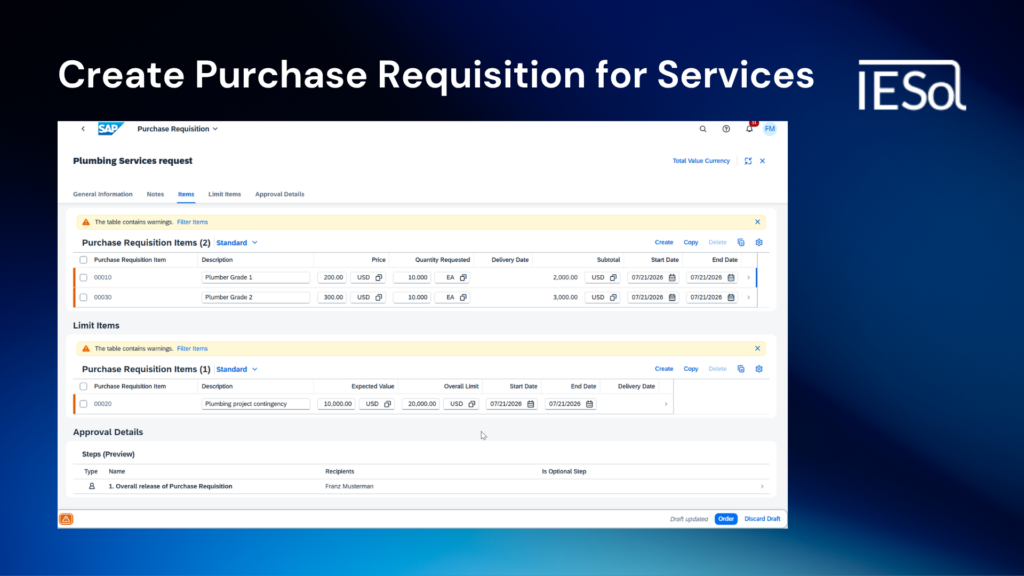
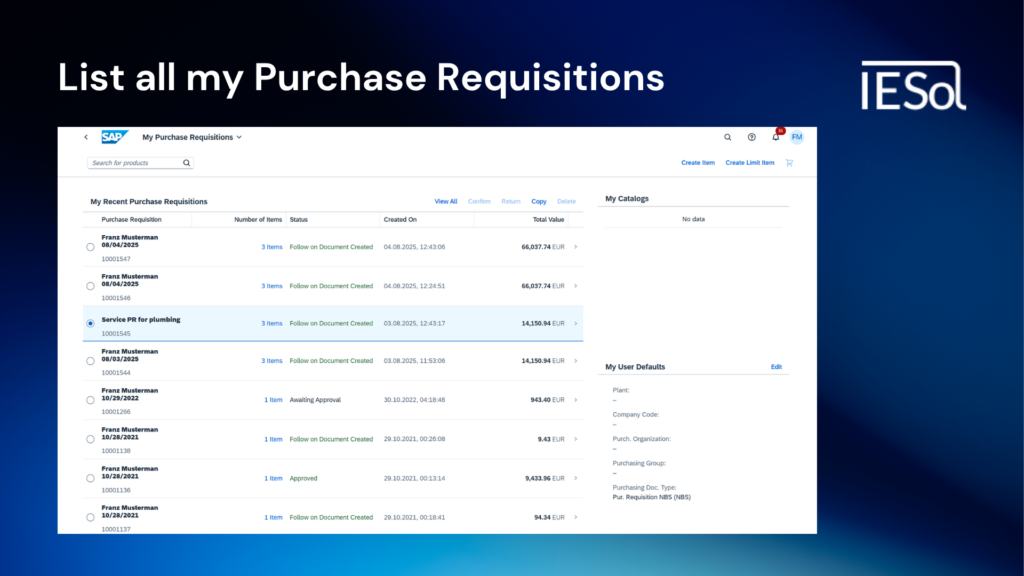
Lean service procurement experience
Classic service procurement experience
Table of Content
The Evolution: Classic vs. Lean
Classic Services (MM-SRV):
The traditional legacy method. While familiar, it relies
on complex hierarchical architectures and heavy manual effort. It is effectively a “dead end” on the SAP Roadmap and acts as a bottleneck for digital transformation.
Lean Services: A streamlined functionality introduced in S/4HANA. Built with
a Clean Core philosophy, it treats services with the same technical simplicity as
material procurement, offering a fast, intuitive, and modern experience.
The Problem: The “UX Trap” and Scalability Wall
Staying on Classic Services creates a “scalability wall”. Standard SAP Fiori Applications; the engine of S/4HANA innovation do not support classic service procurement. This forces users
back into legacy-style screens, prevents mobile adoption, and blocks the deployment of new
ecosystem features.
The Future: Strategic Benefits of Lean Services
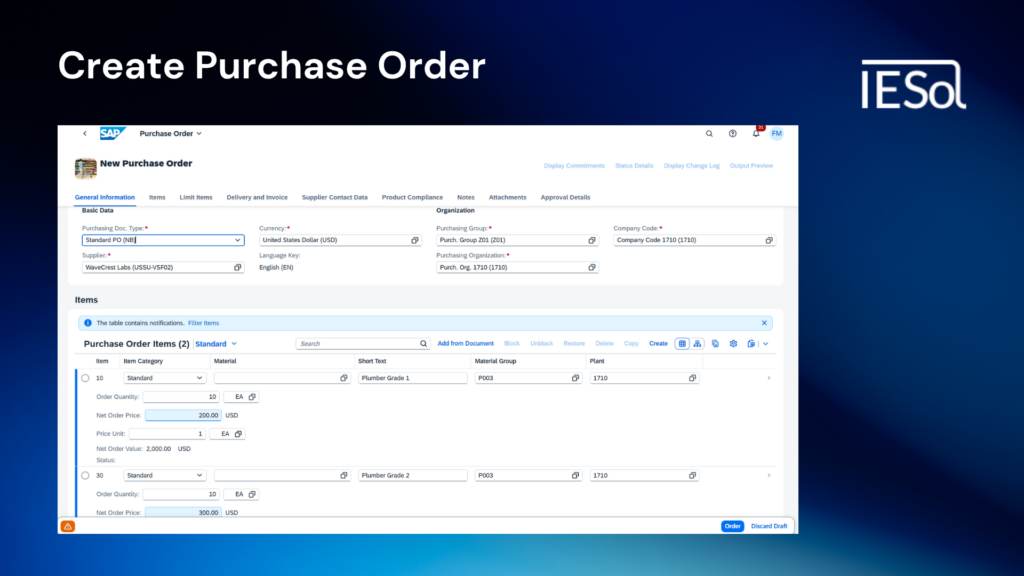
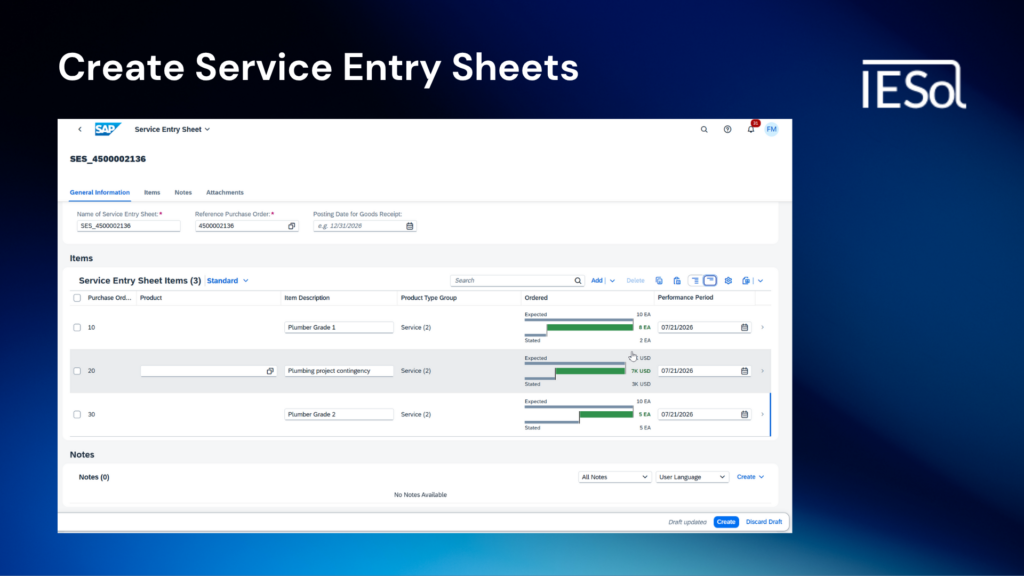
- Native Fiori Adoption: Manage the entire lifecycle; from Purchase Requisitions (PR) to Service Entry Sheets (SES) through modern, responsive Fiori Apps.
- Gateway to AI (Joule): Modern innovations, including the SAP Joule AI Copilot, are built exclusively for Lean architecture. No Lean Services = No AI.
- Real-Time Spend Visibility: By simplifying data structures, Lean Services enables advanced SAP Analytics Cloud reporting without the need for complex, manual data transformations.
- Simplified Sourcing: Support effortless line-item imports and streamlined contract management, reducing the technical burden on procurement teams.
Navigating the Transition: Two Strategic Paths
The approach to Lean Services depends on where you are in your SAP journey
Scenario 1: The ECC to S/4HANA Migrator
Organizations at the start of their S/4HANA journey face a critical “fork in the road” during conversion. Your choice here determines whether you launch a modern system or simply a faster version of your legacy one.
- The Lift and Shift (Brownfield): This approach moves existing Classic Services to S/4HANA “as-is” to minimize initial project scope.
- The Risk: You immediately inherit technical debt and enter Scenario 2 (below) on Day 1. This significantly delays your ROI on User Experience (UX) and keeps your team tethered to legacy GUI screens.
- The Clean Start (Greenfield/Selective Transition): By biting the bullet and migrating to Lean Services during implementation, you ensure your procurement engine is aligned with the SAP Roadmap from the start.
Execution Keys for a Successful Clean Start:
- Strategic ETL Process: Success hinges on a robust Extract, Transform, and Load (ETL) strategy. You must convert all open service procurement transactions into the Lean format before migrating documents into the S/4HANA environment.
- The Dress Rehearsal: Do not underestimate the complexity of data mapping. It is essential to perform a comprehensive migration dress rehearsal. Testing the conversion of active POs and contracts in a sandbox environment ensures that financial balances and supplier commitments remain intact during the final cutover.
- Low-Hanging Fruit: Transforming Service Masters (AC03) from classic to lean is a high-value, low-effort task. Since this capability is natively supported by SAP, it should be the first step in your master data cleanup.
Scenario 2: The S/4HANA Customer in Classic
If you are already live on S/4HANA but trapped in legacy workflows, a surgical migration is
required:
- Landscape Audit: Analyse how SES are generated and quantify the volume of open Service POs to map the cut-over.
- Integration Health Check: Identify dependencies with third-party systems. Ariba Users: Ensure the SAP Integration Suite (formerly CIG) is configured for Lean. The good news: CIG Add-On now supports both Lean and Classic services concurrently.
- The Migration Toolkit: Develop a structured process to short close active Classic Service lines and re-open residual amounts as Lean Service lines or Extended Limit lines.
Executive summary
The shift to Lean Services is about more than just changing a transaction code; it is about
future-proofing your procurement engine. By aligning with the SAP S/4HANA roadmap, you
remove the technical drag of legacy systems and empower your team with AI, mobile
accessibility, and superior spend intelligence.
Here is a technical comparison to help your stakeholders understand the fundamental
architectural shift between the legacy and modern service models.
The Evolution: Classic vs. Lean
Classic Services (MM-SRV):
The traditional legacy method. While familiar, it relies
on complex hierarchical architectures and heavy manual effort. It is effectively a “dead end” on the SAP Roadmap and acts as a bottleneck for digital transformation.
Lean Services: A streamlined functionality introduced in S/4HANA. Built with
a Clean Core philosophy, it treats services with the same technical simplicity as
material procurement, offering a fast, intuitive, and modern experience.
The Problem: The “UX Trap” and Scalability Wall
Staying on Classic Services creates a “scalability wall”. Standard SAP Fiori Applications; the engine of S/4HANA innovation do not support classic service procurement. This forces users
back into legacy-style screens, prevents mobile adoption, and blocks the deployment of new
ecosystem features.
The Future: Strategic Benefits of Lean Services
- Native Fiori Adoption: Manage the entire lifecycle; from Purchase Requisitions (PR) to Service Entry Sheets (SES) through modern, responsive Fiori Apps.
- Gateway to AI (Joule): Modern innovations, including the SAP Joule AI Copilot, are built exclusively for Lean architecture. No Lean Services = No AI.
- Real-Time Spend Visibility: By simplifying data structures, Lean Services enables advanced SAP Analytics Cloud reporting without the need for complex, manual data transformations.
- Simplified Sourcing: Support effortless line-item imports and streamlined contract management, reducing the technical burden on procurement teams.
- Unified Data Model: Enables a single master data object for materials, which unlocks advanced analytics and enhances spend visibility with reduced need for complex transformations.
Navigating the Transition: Two Strategic Paths
The approach to Lean Services depends on where you are in your SAP journey
Scenario 1: The ECC to S/4HANA Migrator
Organizations at the start of their S/4HANA journey face a critical “fork in the road” during conversion. Your choice here determines whether you launch a modern system or simply a faster version of your legacy one.
- The Lift and Shift (Brownfield): This approach moves existing Classic Services to S/4HANA “as-is” to minimize initial project scope.
- The Risk: You immediately inherit technical debt and enter Scenario 2 (below) on Day 1. This significantly delays your ROI on User Experience (UX) and keeps your team tethered to legacy GUI screens.
- The Clean Start (Greenfield/Selective Transition): By biting the bullet and migrating to Lean Services during implementation, you ensure your procurement engine is aligned with the SAP Roadmap from the start.
Execution Keys for a Successful Clean Start:
- Strategic ETL Process: Success hinges on a robust Extract, Transform, and Load (ETL) strategy. You must convert all open service procurement transactions into the Lean format before migrating documents into the S/4HANA environment.
- The Dress Rehearsal: Do not underestimate the complexity of data mapping. It is essential to perform a comprehensive migration dress rehearsal. Testing the conversion of active POs and contracts in a sandbox environment ensures that financial balances and supplier commitments remain intact during the final cutover.
- Low-Hanging Fruit: Transforming Service Masters (AC03) from classic to lean is a high-value, low-effort task. Since this capability is natively supported by SAP, it should be the first step in your master data cleanup.
Scenario 2: The S/4HANA Customer in Classic
If you are already live on S/4HANA but trapped in legacy workflows, a surgical migration is
required:
- Landscape Audit: Analyse how SES are generated and quantify the volume of open Service POs to map the cut-over.
- Integration Health Check: Identify dependencies with third-party systems. Ariba Users: Ensure the SAP Integration Suite (formerly CIG) is configured for Lean. The good news: CIG Add-On now supports both Lean and Classic services concurrently.
- The Migration Toolkit: Develop a structured process to short close active Classic Service lines and re-open residual amounts as Lean Service lines or Extended Limit lines.
Executive summary
The shift to Lean Services is about more than just changing a transaction code; it is about
future-proofing your procurement engine. By aligning with the SAP S/4HANA roadmap, you
remove the technical drag of legacy systems and empower your team with AI, mobile
accessibility, and superior spend intelligence.
Here is a technical comparison to help your stakeholders understand the fundamental
architectural shift between the legacy and modern service models.
Technical Appendix: Classic (MM-SRV) vs. Lean Service Procurement
Feature/Aspect
Classic Service (MM-SRV)
Lean Service Procurement
User Interface
Feature/Aspect
Primary: SAP GUI
(Classic
Transaction
codes like ML81N) Classic Service (MM-SRV)
Lean Service Procurement
Primary: Native SAP Fiori Apps (e.g., Manage
Service Entry Sheets)
Master Data
Feature/Aspect
Service Master (AC03)
or Free-text
Classic Service (MM-SRV)
Material Master (Material Type: SERV)
Lean Service Procurement
Po Item Category
Feature/Aspect
Item
Category D (Services)
Classic Service (MM-SRV)
Standard (No specific item category required)
or E (Enhanced Limits)
Lean Service Procurement
Data Architecture
Feature/Aspect
Complex hierarchical
structures (Tables: ESLL, ESLH)
Classic Service (MM-SRV)
Simplified, material-like structure
(Tables: MMPUR_SES_HEADER, MMPUR_SES_IT
EM)
Lean Service Procurement
Service Entry (SES)
Feature/Aspect
Created via ML81N;
often requires manual,
multi-step procedures
Classic Service (MM-SRV)
Streamlined Fiori-based SES; handles both planned
and unplanned services
Lean Service Procurement
Procurement Type
Feature/Aspect
Supports highly complex,
multi-level service
bundles (e.g., GAEB
standards)
Classic Service (MM-SRV)
Optimized for high-volume, simple or moderately
complex services (Up to 5 hierarchy levels)
Lean Service Procurement
Workflow
Feature/Aspect
Traditional Release
Strategies
Classic Service (MM-SRV)
Flexible Workflow (Modern, cloud-ready approval
engine)
Lean Service Procurement
Mix Item in Po
Feature/Aspect
Service and Material
items are technically
isolated in the document
Classic Service (MM-SRV)
Enables a mix of materials and services within a
single Purchase Order
Lean Service Procurement
AI & Roadmap
Feature/Aspect
Incompatible with future
AI innovations and
central purchasing best
practices
Classic Service (MM-SRV)
Native compatibility with SAP Joule AI and
future SAP Roadmaps
Lean Service Procurement
Executive summary
While Classic Services remains an option for niche, highly complex technical specifications
(such as GAEB compliance in construction), it has become a legacy island. For the vast
majority of enterprises, Lean Services is the mandatory standard for an SAP Clean Core
strategy.
The business case is clear: transitioning to Lean Services offers 20–30% faster system
upgrades and reduces long-term maintenance costs by 15–45% by stripping away
decades of custom architectural debt.
It is a proven industry reality that the cost of doing the right implementation today is
significantly lower than the cost of fixing a wrong one tomorrow. Avoiding the Scenario
2 trap; where you are forced to remediate technical debt after a go-live—is the most
effective way to protect your S/4HANA ROI and ensure your procurement team is ready for
the next wave of AI innovation.